Spatial Audio, Dolby Atmos, and the New Sound Standard
For a long time, stereo was enough. Left. Right. Done. Now that is starting to feel old.


Suggested:
Streaming made music instant. Faster - Cheaper - Every song, everywhere, all at once. But in the middle of all that convenience, something got lost. Music stopped feeling rare.
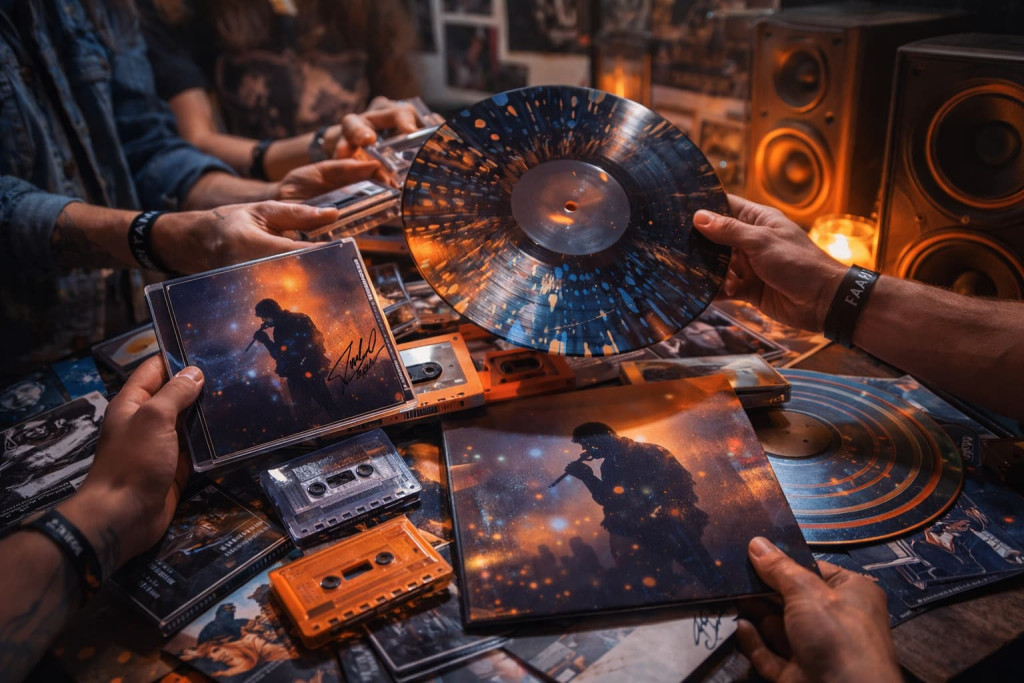
That is a big reason physical releases are starting to feel important again. Vinyl, cassettes, deluxe CDs, zines, and limited-edition merch bundles give music weight again. They turn a release into an object, not just a file disappearing into a playlist. Industry data continues to show strong demand for physical formats, especially vinyl, even while streaming remains dominant.
And that matters because fans are not only looking for access anymore.
They are looking for attachment.
A physical release says:
this moment matters.
This record exists.
This belongs to a world.
That is why artists are leaning into collectible culture again. Limited drops, alternate covers, colored vinyl, signed editions, photo books, packaging design, and tactile fan products all make a release feel more intentional. In practice, physical formats have become part of artist branding, fan identity, and direct-to-fan revenue, not just a way to distribute audio.
It also changes how fans engage.
Streaming is passive.
Physical is ritual.
You put it on.
You hold it.
You display it.
You keep it.
And in an era where everything is available all the time, ownership suddenly feels emotional again.
That is the real shift.
Physical releases are not back because they are more efficient.
They are back because they feel better.
For artists, that makes them more than nostalgia.
They become experience.
Identity.
Memory.